If you are planning HVAC work in Lawrenceville, GA, understanding the potential HVAC cost can help you budget before scheduling a repair, maintenance visit, or replacement. In 2026, HVAC pricing can vary significantly depending on the type of system, equipment size, efficiency rating, condition of existing components, labor, ductwork, and the complexity of the installation.
For Lawrenceville homeowners, a minor repair may cost a few hundred dollars, while replacing a complete heating and cooling system can cost several thousand dollars or more. The right approach is to have the system properly diagnosed and receive a written estimate based on the actual condition of your equipment and home.
Key Takeaways
- HVAC costs in Lawrenceville vary according to the repair, system type, equipment size, and installation requirements.
- Routine maintenance is generally much less expensive than major repairs or complete replacement.
- A professional HVAC Diagnostics visit can identify the actual cause of a comfort or equipment problem before unnecessary parts are replaced.
- HVAC replacement can involve equipment, labor, refrigerant requirements, ductwork, electrical work, drainage, permits, and other installation factors.
- Higher-efficiency equipment may have a higher upfront price but can reduce energy consumption over time.
- Proper system sizing and professional installation are important for comfort, efficiency, and equipment performance.
- ON TIME HEATING & COOLING can help Lawrenceville homeowners evaluate HVAC problems, repairs, maintenance, and replacement options.
What Is HVAC Cost?
HVAC cost is the amount a homeowner pays for heating, ventilation, and air conditioning work. It can include diagnostic fees, labor, replacement parts, equipment, installation, maintenance, ductwork, refrigerant-related work, electrical components, and other services required to restore or improve a home’s heating and cooling system.
Because every property and HVAC system is different, there is no single price that applies to every Lawrenceville home.
A useful way to think about HVAC pricing is to separate it into three categories:
- HVAC repair: Fixing a specific failed or damaged component.
- HVAC maintenance: Preventive service intended to keep equipment operating properly.
- HVAC replacement: Removing older equipment and installing a new system or major components.
How Much Does HVAC Cost in Lawrenceville, GA?
For planning purposes, Lawrenceville HVAC pricing can range from relatively small service expenses to five-figure replacement projects.
Local 2026 pricing information places common HVAC work in broad ranges such as:
| HVAC Service | Typical Planning Range |
|---|---|
| HVAC diagnostic/service visit | About $75–$150 |
| Common AC repair | About $150–$650 |
| AC tune-up/maintenance | About $90–$250 |
| Refrigerant-related repair | About $300–$800+ |
| Compressor repair | About $1,200–$2,800+ |
| Complete HVAC replacement | About $6,000–$15,000+ |
These are planning ranges, not guaranteed quotes. Published Lawrenceville estimates vary, with some 2026 local replacement estimates extending above $15,000 depending on ZIP code, equipment, season, and project conditions.
The final price should be based on an inspection and written estimate for the specific home.
HVAC Repair Cost in Lawrenceville
HVAC repair is often the most practical option when the existing system is otherwise in reasonable condition.
A technician may need to troubleshoot symptoms such as:
- Air conditioner blowing warm air
- Weak or inconsistent airflow
- System turning on and off repeatedly
- Unusual noises
- Water around the indoor unit
- Frozen coils
- Thermostat problems
- Electrical component failures
- Refrigerant problems
- Uneven temperatures between rooms
- Heating problems during colder weather
The cost depends heavily on the component involved.
For example, a relatively simple electrical component may be considerably less expensive to replace than a compressor or major system component. A professional diagnosis helps determine whether the problem is a repairable component failure or evidence of a larger system issue.
Why HVAC Diagnostics Matter
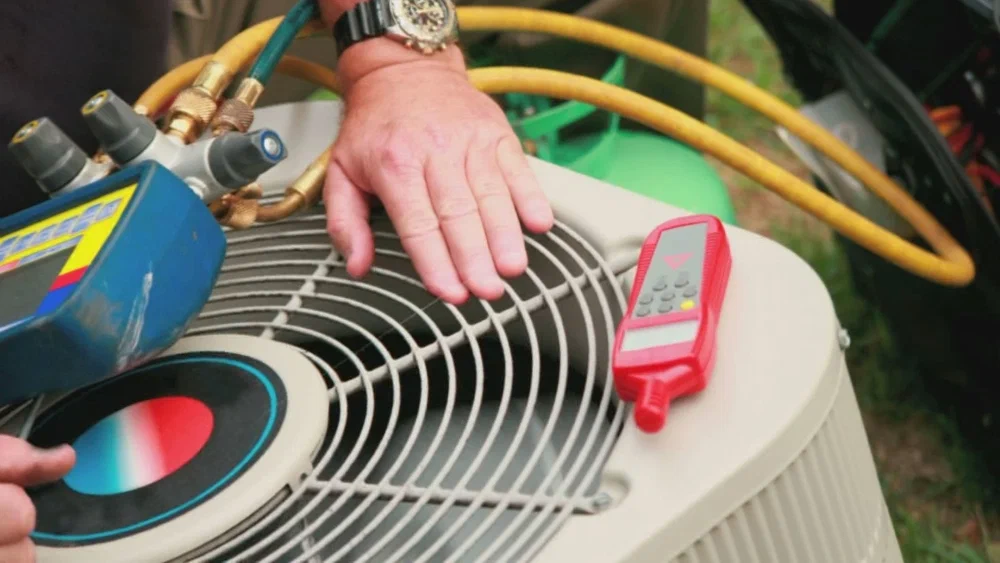
HVAC Diagnostics involves examining the system to identify the source of a problem instead of simply replacing parts based on symptoms.
A proper diagnostic process may involve checking:
- Thermostat operation
- Electrical connections
- Capacitors and contactors
- Refrigerant conditions
- Airflow
- Filters
- Coils
- Blower components
- Condensate drainage
- Ductwork
- System controls
- Heating components
ENERGY STAR recommends regular professional inspections and notes that maintenance should include checking electrical connections, condensate drains, controls, coils, refrigerant levels, and airflow-related components.
HVAC Maintenance Cost
Routine HVAC maintenance generally costs less than emergency repairs or replacement.
A maintenance visit may include inspection, cleaning, system testing, airflow checks, electrical checks, condensate-drain inspection, and other manufacturer- or system-specific procedures.
ENERGY STAR recommends annual pre-season HVAC checkups, with cooling systems commonly checked before the cooling season and heating equipment before winter.
Regular maintenance can also help homeowners identify developing problems before they become larger repair issues.
What Homeowners Can Do Between Visits
Homeowners can support HVAC performance by:
- Checking the air filter regularly
- Keeping outdoor equipment clear of leaves and debris
- Keeping supply and return vents unobstructed
- Watching for unusual sounds or odors
- Paying attention to changes in airflow
- Monitoring rooms that suddenly become warmer or colder
- Scheduling professional service when performance changes
ENERGY STAR recommends checking central HVAC filters about once a month and replacing or cleaning them when necessary.
HVAC Replacement Cost in Lawrenceville, GA
Complete HVAC replacement is a significantly larger investment than routine maintenance or a minor repair.
A replacement project may include:
- New outdoor condenser or heat pump
- Indoor air handler or furnace
- Evaporator coil
- Thermostat
- Refrigerant-related work
- Electrical connections
- Drainage components
- Ductwork modifications
- Equipment removal
- Installation labor
- System testing and commissioning
Local Lawrenceville estimates published in 2026 show complete HVAC replacement projects ranging from approximately $6,000 to $15,000 or more, while other local estimates are higher depending on the ZIP code and project conditions.
That difference illustrates why homeowners should compare written, system-specific estimates rather than relying on a single generic online average.
What Factors Affect HVAC Pricing?
Several factors can change the final HVAC price.
1. System Size
HVAC equipment must be appropriately sized for the home.
Larger equipment is not automatically better. An oversized system can cycle too frequently, while an undersized system may struggle to maintain indoor comfort.
ENERGY STAR recommends having contractors determine appropriate system sizing using a load calculation such as Manual J rather than relying solely on a rule-of-thumb approach.
2. Equipment Efficiency
Efficiency ratings can affect both equipment price and long-term energy use.
Modern HVAC equipment uses ratings such as SEER2 for cooling efficiency and HSPF2 for heat-pump heating performance. The U.S. Department of Energy explains that these updated rating methods have been used for residential central air conditioners and heat pumps since the 2023 efficiency-standard changes.
Higher-efficiency equipment can cost more initially, so homeowners should consider both purchase price and expected operating costs.
3. Ductwork Condition
An HVAC replacement does not automatically solve comfort problems if the home’s duct system has significant leaks, restrictions, or poor airflow.
ENERGY STAR recommends evaluating ductwork as part of quality HVAC installation because leaky ducts can waste energy and reduce airflow.
4. Type of HVAC System
Pricing varies between:
- Central air conditioning systems
- Heat pumps
- Gas furnaces
- Electric heating systems
- Ductless mini-splits
- Packaged HVAC systems
- Dual-fuel systems
The best solution depends on the home’s existing setup, comfort requirements, electrical and gas infrastructure, and homeowner priorities.
5. Installation Complexity
A straightforward replacement can cost less than a project requiring extensive modifications.
Installation complexity may increase when a project requires:
- Duct modifications
- Electrical upgrades
- Drainage changes
- Equipment relocation
- Difficult attic or crawl-space access
- New thermostat wiring
- Additional airflow corrections
- Extensive removal work
6. Emergency Service
Emergency HVAC service can have different pricing from a routine appointment because of after-hours scheduling, urgent dispatch, and limited availability.
If the problem is not an immediate safety concern, scheduling standard service may provide more flexibility.
HVAC Pricing: Repair or Replace?
One of the biggest questions homeowners face is whether to repair an existing HVAC system or replace it.
A repair may make sense when:
- The system is relatively young
- The failure is isolated
- Replacement parts are reasonably available
- The equipment has been maintained
- The system still provides acceptable comfort
- Repair costs are reasonable compared with replacement
Replacement may deserve consideration when:
- The system has repeated failures
- Major components are failing
- Repair costs are becoming substantial
- Comfort remains inconsistent
- Energy performance has declined
- The equipment is near the end of its useful service life
- The homeowner wants to upgrade system efficiency
There is no universal repair-versus-replacement dollar threshold. A qualified HVAC Contractor should evaluate the equipment, repair requirements, expected remaining service life, and replacement options.
How to Choose HVAC Solutions for Your Lawrenceville Home
The right HVAC solution should address the actual problem rather than simply replacing equipment.
Start by identifying:
- What is wrong with the current system?
- How old is the equipment?
- Is the problem repairable?
- Is airflow adequate?
- Is the system properly sized?
- Are the ducts in acceptable condition?
- What efficiency options are available?
- What will installation require?
- What maintenance will the new system need?
- What is included in the written estimate?
This approach helps homeowners compare HVAC solutions based on the complete project rather than only the equipment’s advertised price.
How to Get an Accurate HVAC Estimate
For a more useful HVAC estimate, prepare information about your current system before contacting a contractor.
Step 1: Describe the Problem
Tell the technician exactly what you are experiencing.
For example:
- “The AC runs but the house is not cooling.”
- “Some rooms are much warmer than others.”
- “The system shuts off after a few minutes.”
- “The outdoor unit is making an unusual sound.”
Specific symptoms can help the technician understand where to begin.
Step 2: Have the System Inspected
A professional HVAC inspection can determine whether the issue is related to the thermostat, electrical components, airflow, refrigerant, mechanical components, ductwork, or another part of the system.
Step 3: Ask for a Written Estimate
A detailed estimate should make it easier to understand:
- Equipment being installed or repaired
- Labor
- Parts
- Optional upgrades
- Warranty information
- Any additional work
- Total project price
Step 4: Compare the Complete Scope
Do not compare estimates solely by the bottom-line number.
Check whether each estimate includes comparable equipment, installation work, warranties, system testing, and necessary modifications.
Local HVAC Services from ON TIME HEATING & COOLING
For homeowners searching for HVAC services in Lawrenceville, GA, ON TIME HEATING & COOLING provides a local option for addressing heating and cooling needs.
Depending on the system and issue, HVAC services can include:
- HVAC troubleshooting
- HVAC diagnostics
- Heating service
- Air conditioning service
- HVAC repairs
- Preventive maintenance
- System replacement
- HVAC installation
- Comfort and airflow evaluations
When a system is not working correctly, proper troubleshooting can help identify the underlying issue before deciding whether repair or replacement is appropriate.
HVAC Troubleshooting: Common Problems Homeowners Notice
Homeowners can often identify the symptom even when they cannot identify the cause.
AC Is Blowing Warm Air
Possible causes include thermostat settings, restricted airflow, refrigerant issues, electrical problems, compressor problems, or other system failures.
A technician should diagnose the actual cause before recommending a repair.
Weak Airflow
Weak airflow can result from a dirty filter, blower problem, duct restriction, closed vents, or other issues.
Because airflow affects comfort and system performance, it should be evaluated as part of HVAC troubleshooting.
HVAC System Runs Constantly
Long or continuous operation can occur when outdoor conditions are demanding, but it can also indicate problems involving system capacity, airflow, refrigerant, insulation, ductwork, or equipment condition.
Uneven Temperatures
If one part of the home is comfortable while another remains significantly warmer or colder, the cause may involve airflow, ductwork, insulation, zoning, equipment sizing, or another factor.
Why Professional HVAC Service Matters
HVAC equipment combines electrical, mechanical, refrigerant, airflow, and combustion-related components depending on the system.
Professional service helps homeowners move from a symptom-based guess to a documented diagnosis.
Quality installation also matters. ENERGY STAR states that proper sizing, optimized airflow, correct refrigerant charge, and evaluation of ductwork are important parts of quality HVAC installation.
How to Potentially Reduce Long-Term HVAC Costs
Homeowners cannot control every HVAC expense, but they can reduce avoidable problems.
Keep Filters Clean
A dirty filter can restrict airflow and make the system work harder.
Schedule Preventive Maintenance
Regular professional maintenance can identify developing problems and keep equipment operating properly.
Keep Outdoor Equipment Clear
Leaves, grass, dirt, and other debris can interfere with outdoor equipment.
Address Small Problems Early
Unusual noises, water leaks, weak airflow, or inconsistent temperatures should not automatically be ignored.
Focus on Proper Installation
The equipment itself is only one part of HVAC performance. Correct sizing, airflow, refrigerant charge, ductwork, and installation quality all matter.
When Should You Call an HVAC Company?
Call an HVAC Company when your system:
- Stops heating or cooling
- Produces unusual noises
- Has persistent airflow problems
- Leaks water
- Repeatedly cycles on and off
- Produces inconsistent temperatures
- Has recurring electrical issues
- Shows signs of refrigerant problems
- Requires frequent repairs
- Is no longer providing reliable comfort
For safety-related issues, especially those involving electrical or fuel-burning equipment, homeowners should avoid attempting complex repairs themselves and contact a qualified professional.
Frequently Asked Questions About HVAC Cost in Lawrenceville, GA
How much does HVAC repair cost in Lawrenceville, GA?
Many common HVAC repairs in Lawrenceville fall within a few hundred dollars, although major component repairs can cost substantially more. Published local 2026 pricing places common AC repairs around $150–$650, with larger repairs such as compressor replacement reaching well above $1,000.
How much does a new HVAC system cost in Lawrenceville?
A complete HVAC replacement can commonly fall in the several-thousand-dollar range, with 2026 Lawrenceville estimates around $6,000–$15,000+ depending on equipment, installation requirements, efficiency, and property conditions. Some local estimates extend beyond that range for higher-cost projects.
What affects HVAC cost the most?
System size, equipment efficiency, type of HVAC system, installation complexity, ductwork, electrical requirements, labor, and the condition of the existing equipment can all affect the final HVAC cost.
Is it cheaper to repair or replace an HVAC system?
Repair is often less expensive upfront when the problem is isolated and the existing system remains in good condition. Replacement may make more sense when a system has recurring failures, major component problems, declining performance, or significant remaining repair needs.
How often should HVAC systems be maintained?
Annual professional maintenance is a common recommendation, with seasonal checkups helping homeowners prepare cooling and heating equipment for periods of higher use. ENERGY STAR recommends annual pre-season checkups and regular filter inspection.
Final Thoughts on HVAC Cost in Lawrenceville, GA
Understanding HVAC cost in Lawrenceville, GA starts with recognizing that every project is different. A minor repair, seasonal tune-up, diagnostic visit, and complete system replacement involve very different levels of labor, equipment, and materials.
Instead of choosing an HVAC solution based solely on an online price range, have the system properly evaluated and request a clear written estimate. Consider the condition of the equipment, repair requirements, efficiency, system sizing, ductwork, installation quality, and expected long-term performance.
If your Lawrenceville home needs HVAC troubleshooting, diagnostics, repair, maintenance, or replacement, ON TIME HEATING & COOLING can help you evaluate the issue and determine the appropriate next step.
Need HVAC help in Lawrenceville, GA? Contact ON TIME HEATING & COOLING to discuss your heating and cooling needs and request an estimate.